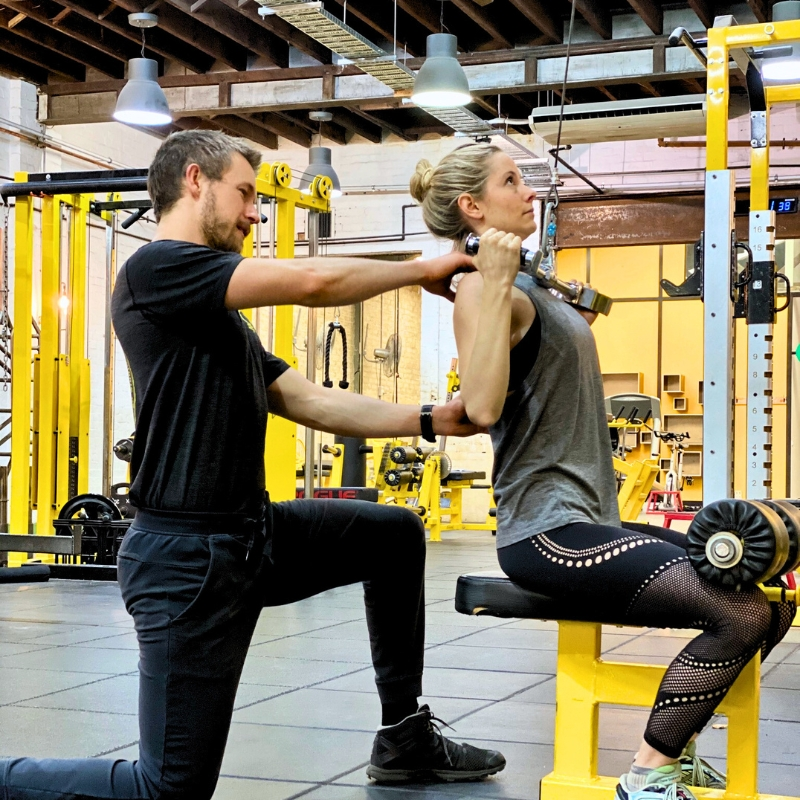
The best lower back exercises make your back stronger, not just looser. Start with your glutes and hips, then load the back itself: glute bridges, bird dogs, dead bugs, Romanian deadlifts, back extensions, farmer’s carries, split squats and cable pull-throughs. Five of the eight need no equipment, and two sessions a week is a solid start. In the biggest comparison of exercise types for back pain we’ve seen, strength work, pilates and control drills all beat stretching alone. Strength is the lever most people never pull.
Why strengthening beats stretching alone
Back problems are everywhere. Around 4 million Australians report them, roughly 16% of us. Most of those backs aren’t damaged, just undertrained and a bit scared.
Exercise helps. The interesting part is which kind. Stretching alone sits near the bottom of the list, strength training, pilates and stability work near the top. Train the posterior chain (glutes, hips, the muscles along your spine) and it gets better again.
That’s why our back pain personal training works the posterior chain first: glutes, hips, back, in that order.
When not to train through it
Most back pain is safe to move with. Some isn’t. See a doctor first if you have any of these:
- Numbness or weakness in the legs
- Bladder or bowel changes
- Pain after a fall or accident
- Fever
- Unexplained weight loss
- Pain that wakes you at night
None of those? Keep moving. The Lancet’s back pain series is clear that staying active beats bed rest, routine scans and strong painkillers. Check with your GP first if you have an osteoporosis diagnosis, you’re pregnant or you’ve had recent surgery.
The 8 best lower back exercises
Most are compound exercises. Own the easy version before the heavy one.
Five work at home with no kit at all: the glute bridge, bird dog, dead bug, the floor version of the back extension and a bodyweight split squat. The pull-through works with a resistance band. The deadlift and the carry need something heavy to hold.
1. Glute bridge and hip thrust
Trains: glutes and hamstrings, which should carry the load.
Steps:
- Lie on your back, knees bent, feet flat and hip-width apart.
- Push through your heels until knees, hips and shoulders form a straight line.
- Pause for 2 seconds, then lower slowly.
Cue: ribs down, so the lower back doesn’t arch.
Easier: hold the top for 10 to 20 seconds.
Harder: hip thrust, upper back on a bench, a barbell across your hips.
2. Bird dog
Trains: the deep back muscles that hold your spine still.
Steps:
- Start on hands and knees, hands under shoulders, knees under hips.
- Reach one arm forward and the opposite leg back, level with your torso.
- Hold for 3 seconds, return without the hips swaying, then swap.
Cue: picture a glass of water on your lower back. Don’t spill it.
Easier: move only the leg, or only the arm.
Harder: hold for 10 seconds.
3. Dead bug
Trains: the abdominal wall that braces your spine.
Steps:
- Lie on your back, arms straight up, knees bent to 90 degrees over your hips.
- Press your lower back gently into the floor and keep it there.
- Lower one arm overhead and the opposite leg towards the floor, breathing out. Return and switch.
Cue: breathe out slowly through the whole movement.
Easier: move the legs only, knees bent.
Harder: straighten the moving leg, or hold a light plate.
4. Romanian deadlift or kettlebell deadlift
Trains: the hip hinge, the pattern behind every safe lift off the floor.
Steps:
- Stand tall with a kettlebell or two dumbbells, feet hip-width, knees soft.
- Push your hips back and slide the weight down your thighs, back long.
- Stop at a firm hamstring stretch, around knee height, then drive the hips forward to stand.
Cue: shut a car door behind you with your backside.
Easier: kettlebell deadlift from a box, so the weight starts higher.
Harder: more load, then a barbell Romanian deadlift.
Full deadlifts from the floor are great once you’ve got a base. One study of deadlift training for back pain found the people who did best started with less pain and better back endurance.
5. Back extension (45-degree bench, or the floor)
Trains: the back extensors and glutes directly, under control.
Steps:
- Set the pad just below your hip bones so your hips can fold.
- Cross your arms and lower your torso until you feel a hamstring stretch.
- Raise back to a straight line with your legs. Don’t go higher.
Cue: finish with your glutes, not by arching your lower back.
Easier: bodyweight only, shorter range. No bench? Lie face down, hands by your temples, lift your chest a few centimetres, pause, lower.
Harder: hold a plate to your chest, or use a reverse hyper if there’s one.
6. Farmer’s carry
Trains: grip, trunk and a tall spine under load.
Steps:
- Hinge down and pick up a heavy dumbbell or kettlebell in each hand.
- Stand tall, shoulders down, ribs stacked over hips.
- Walk 20 to 40 metres with short steps, then hinge to set them down.
Cue: walk tall, like you’re carrying heavy shopping past someone you want to impress.
Easier: lighter weights, shorter distance.
Harder: one weight only (a suitcase carry), so your trunk resists tipping sideways.
7. Split squat
Trains: glutes and quads one leg at a time, so the weaker side can’t hide.
Steps:
- Take a long step forward. Back heel up, front foot flat.
- Lower your back knee towards the floor, torso upright.
- Drive through the front heel to stand. Finish all reps, then swap legs.
Cue: go down, not forward. Front knee over the ankle.
Easier: hold a rack for balance and shorten the range.
Harder: dumbbells in each hand, then rear foot on a low bench.
8. Cable pull-through
Trains: the hip hinge with the load behind you, so the glutes finish.
Steps:
- Fix a rope to a low cable, or loop a resistance band around a post at knee height. Face away and hold it between your legs.
- Step forward, hinge at the hips and let the rope travel back.
- Drive the hips forward and stand tall, squeezing the glutes.
Cue: hips back, then hips through. Your arms are just hooks.
Easier: lighter weight, smaller hinge.
Harder: more load, or kettlebell swings once the hinge is clean.
A simple 2-day-a-week plan
The Australian activity guidelines ask for strength work on at least 2 days a week. Leave a day between sessions.
| Exercise | Sets | Reps | Progress when |
|---|---|---|---|
| Glute bridge or hip thrust | 3 | 10 to 12 | Clean 2-second pauses |
| Bird dog | 2 | 6 each side | 10-second holds, still hips |
| Dead bug | 2 | 8 each side | Lower back stays down |
| Romanian or kettlebell deadlift | 3 | 8 to 10 | Last 2 reps hard, back flat |
| Back extension | 2 | 10 to 12 | Bodyweight feels easy |
| Farmer’s carry | 3 | 30 metres | Posture holds throughout |
| Split squat | 2 | 8 each side | Steady without support |
| Cable pull-through | 2 | 12 | Hinge stays clean |
Run it for 4 weeks, then add a little load or a couple of reps at the “progress when” mark. That’s progressive overload in practice.
What about lower back stretches?
Stretching isn’t useless. It just isn’t the thing that fixes a back.
A stretch feels good because it turns the volume down for a while, and that’s worth having on a stiff morning or after a long drive. It doesn’t build anything, though, which is why stretching alone sits near the bottom of that comparison at the top of this article. Use it to feel better now. Use the strength work so you need it less.
Three worth knowing:
Knees to chest. Lie on your back and hug one or both knees in towards your chest. Hold 30 seconds. Good first thing in the morning, when everything’s stiff.
Child’s pose. Kneel, sit back on your heels and reach your arms forward along the floor. Hold 30 to 60 seconds and breathe into your lower back.
Figure-4. On your back, cross one ankle over the opposite knee and pull that thigh towards you. Hold 30 seconds each side. This one’s for the glutes, which often take the blame for a sore back. Our hip mobility exercises guide covers these holds in more depth.
Do them whenever they help. Then go and do the 8 exercises above, because that’s what changes how much your back can take.
Common mistakes
Rounding into the hinge. The load just moved from your hips to your spine. Shorten the range or lighten the weight.
Holding your breath. Breathe out through the hard part.
Adding load too soon. A clean bodyweight hinge beats an ugly heavy one. Film yourself from the side.
Skipping the glutes. Glutes first, hips second, back third. That order is the whole point.
How long until it helps
A Gold Coast review of posterior-chain training found it beat general exercise and walking for pain, disability and strength. The catch: those programs ran for 12 to 16 weeks.
Some people feel better in the first fortnight, mostly from moving again. A back that copes with more takes months. Plan for a season, not a week.
Preventing the next episode
Training also helps stop the next one. A University of Sydney review found exercise alone cut the risk of a back pain episode by about 35%, and exercise plus a little education by 45%. Back belts and shoe insoles did nothing.
How we do it at 5EW
Our back pain personal training is strength-based, not stretch-based, and runs in that same order: glutes, hips, back. Local osteopaths and physiotherapists trust it.
You’d start with a free 60-minute Discovery Consult and a movement and body composition scan (mobility, posture and 40+ body composition markers). Then a 1:1 personal training program written around your back, the same coach every session and a new program every 4 weeks. Stiff hips often load the lower back, so read our hip mobility exercises guide too.
Frequently asked questions
Should I exercise with lower back pain?
Usually, yes. Staying active beats resting. Start with the floor exercises (glute bridges, bird dogs and dead bugs) and keep any discomfort mild. If you have any of the red flags above, or pain that gets sharper with every session, see a doctor first.
Are deadlifts bad for your back?
No. A deadlift is a hip hinge with weight, and the hinge is one of the most useful patterns a back can own. The problem is loading it before you can control it. Build the base first with kettlebell deadlifts and back extensions.
How often should I train my lower back?
Two sessions a week is plenty to start, with a rest day between. That’s also the minimum the Australian guidelines ask for. Later, add a third day or fold these into your normal program. More isn’t better if the quality drops.
What exercises should I avoid with lower back pain?
Anything that spikes your pain during or after a session, plus heavy rounded-back lifting (weighted sit-ups, rounded deadlifts) until you’ve built a base. Few exercises are banned outright. The problem is usually dose and technique. If in doubt, make it easier and ask a coach to watch.
Your lower back gets stronger like everything else: the right exercises, done well, with a little more over time. Want a coach to check your hinge and write the plan? Book a free consult and we’ll start with the scan.
Written by the coaching team at 5th Element Wellness in Fitzroy North. Meet the coaches.
